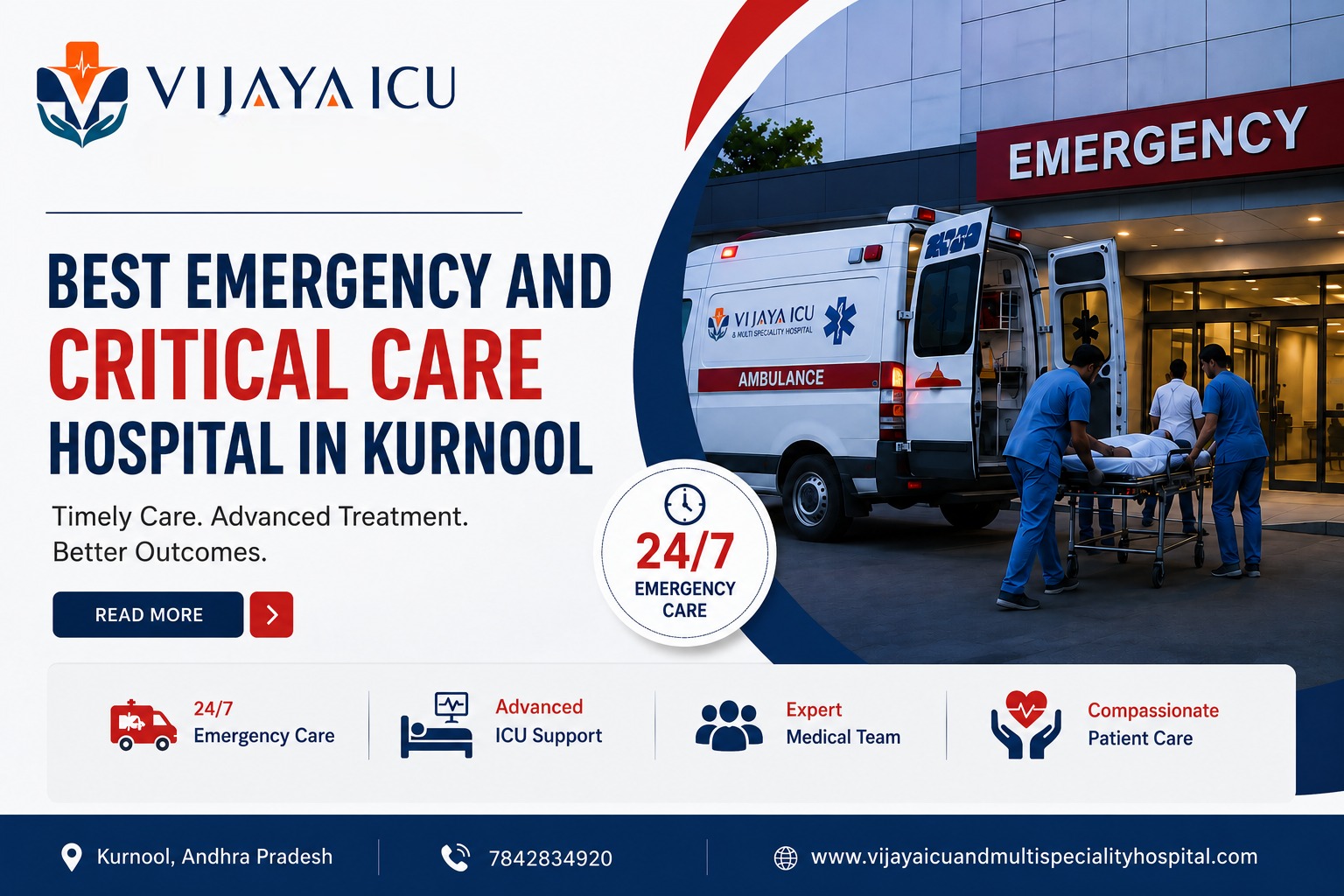
Best Emergency and Critical Care Hospital in Kurnool: What to Look for in Emergency Healthcare
Medical emergencies can happen without warning. Whether it is a road accident, sudden chest pain, breathing difficulty, severe infection, stroke symptoms, serious injury, or another life-threatening condition, receiving timely medical attention can make an important difference.
In such situations, choosing the right hospital is extremely important. Patients and their families need access to prompt evaluation, experienced medical professionals, intensive monitoring, diagnostic support, and appropriate treatment under one roof.
For people searching for the best emergency and critical care hospital in Kurnool, it is important to understand what makes an emergency and critical care facility capable of handling serious medical conditions. Vijaya ICU & Multi Speciality Hospital focuses on providing emergency and critical care support with an emphasis on timely assessment, continuous monitoring, and coordinated medical care.
Why Emergency and Critical Care Services Matter
Emergency medicine deals with conditions that require immediate medical attention. Delays in evaluation or treatment may increase the risk of complications in certain serious conditions.
Critical care, on the other hand, is designed for patients who require close observation, continuous monitoring, and specialized medical management because of a serious or potentially life-threatening illness or injury.
A hospital providing both emergency and critical care services can help patients move efficiently from initial assessment to further evaluation, treatment, monitoring, and specialist care when required.
For families in Kurnool, having access to a hospital equipped to manage emergencies and critical conditions can provide an important healthcare option when immediate medical attention is needed.
What to Look for in an Emergency Hospital in Kurnool
When choosing an emergency hospital, patients and their families should consider several important factors.
1. Prompt Emergency Assessment
In an emergency, the first step is understanding the patient's condition quickly. A well-organized emergency department should be able to assess patients and identify conditions that may require immediate intervention.
Rapid assessment can help doctors determine the next appropriate steps based on the patient's symptoms, medical history, examination, and diagnostic findings.
2. Critical Care and ICU Support
Some patients may require intensive monitoring after an emergency or during treatment for a serious medical condition.
An ICU provides an environment where critically ill patients can receive close observation and appropriate medical management. ICU care may be required for patients with severe infections, respiratory problems, serious injuries, complications after surgery, or other critical conditions.
3. Multispeciality Medical Support
Emergency patients may present with complex conditions involving different organs or systems. Access to specialists from multiple medical fields can support coordinated diagnosis and treatment.
A multispeciality hospital can help bring different areas of medical expertise together when a patient's condition requires more comprehensive evaluation.
4. Diagnostic and Medical Support
Timely diagnosis can be an important part of emergency care. Depending on the patient's condition, doctors may recommend blood tests, imaging, cardiac evaluation, or other diagnostic procedures.
Having appropriate diagnostic support available can help medical teams make informed decisions regarding treatment.
5. Continuous Patient Monitoring
Critically ill patients may require continuous observation because their condition can change quickly.
Monitoring vital parameters and responding to changes promptly are important components of critical care. The exact level of monitoring and treatment depends on the patient's medical condition and the treating doctor's assessment.
Common Conditions That May Require Emergency Care
Emergency departments may treat a wide range of urgent medical conditions. These can include:
- Serious accidents and traumatic injuries
- Sudden chest pain or suspected cardiac emergencies
- Breathing difficulties
- Severe infections
- Stroke-related symptoms
- Uncontrolled bleeding
- Severe abdominal pain
- Loss of consciousness
- Poisoning and certain toxic exposures
- Serious fractures and injuries
- Sudden deterioration of an existing medical condition
- Other potentially life-threatening medical emergencies
If someone experiences a serious or sudden medical problem, seeking professional medical attention quickly is important rather than delaying care or attempting to manage a potentially serious condition at home.
Emergency and Trauma Care in Kurnool
Road accidents and other traumatic injuries can require immediate medical evaluation. Trauma patients may have injuries that are not immediately obvious, making professional assessment particularly important.
Depending on the severity of the injury, patients may require emergency stabilization, diagnostic evaluation, surgical consultation, orthopedic care, critical care monitoring, or other specialist support.
A hospital with emergency and multispeciality capabilities can help coordinate these services based on the patient's needs.
Critical Care for Seriously Ill Patients
Critical care is not limited to accident or trauma patients. People with severe medical illnesses may also require intensive care and continuous monitoring.
Patients with serious infections, respiratory complications, organ-related problems, post-operative complications, or other critical conditions may require ICU-level care as determined by their treating medical team.
At Vijaya ICU & Multi Speciality Hospital, critical care is focused on supporting patients who require close medical observation and specialized care.
Why Choose Vijaya ICU & Multi Speciality Hospital?
When searching online for the best emergency and critical care hospital in Kurnool, patients should look beyond a hospital's name and understand the type of care and support available.
Vijaya ICU & Multi Speciality Hospital is focused on providing emergency and critical care services for patients who require timely medical attention and continuous clinical support.
The hospital's multispeciality approach allows patients to access medical expertise across different areas when their condition requires coordinated care.
Key areas to consider include:
- Emergency medical evaluation
- Critical care and ICU support
- Management of serious medical conditions
- Trauma and emergency support
- Multispeciality consultations
- Continuous patient monitoring
- Diagnostic evaluation as required
- Coordinated medical management
The appropriate treatment depends on the patient's symptoms, diagnosis, medical history, and overall condition. Patients should consult qualified medical professionals for individual medical advice.
When Should You Go to an Emergency Hospital?
Certain symptoms should not be ignored, particularly when they appear suddenly or are severe.
Seek immediate medical attention for symptoms such as:
- Severe difficulty breathing
- Sudden chest pain or pressure
- Loss of consciousness
- Sudden weakness or difficulty speaking
- Severe bleeding
- Major accidents or injuries
- Seizures
- Severe allergic reactions
- Sudden confusion
- Serious burns or trauma
- Persistent vomiting with severe symptoms
- Any sudden or rapidly worsening condition
In a serious emergency, do not wait for symptoms to improve on their own. Seek appropriate emergency medical assistance as soon as possible.
The Importance of Timely Critical Care
Critical conditions can change rapidly. A patient who initially appears stable may require closer observation if their condition changes.
Timely critical care helps medical teams monitor the patient's condition and make treatment decisions based on clinical findings. Depending on the situation, critical care may involve medication, respiratory support, fluid management, monitoring of vital signs, treatment of infection, post-operative observation, or other medical interventions.
The specific treatment provided is determined by the treating doctors according to the patient's condition.
Choosing the Right Critical Care Hospital in Kurnool
When looking for a critical care hospital in Kurnool, consider factors such as:
- Availability of ICU and critical care facilities
- Emergency medical support
- Availability of qualified doctors and clinical staff
- Multispeciality medical services
- Diagnostic support
- Patient monitoring capabilities
- Ability to manage serious medical conditions
- Accessibility for patients and families
Making these considerations can help patients and families make a more informed healthcare decision.
Conclusion
When a medical emergency occurs, every moment can feel critical for patients and their families. Access to timely assessment, emergency treatment, intensive monitoring, and specialist medical support can be extremely important for patients with serious conditions.
For those searching for the best emergency and critical care hospital in Kurnool, Vijaya ICU & Multi Speciality Hospital provides emergency and critical care services with a focus on timely medical evaluation, continuous patient monitoring, and multispeciality support.
If you or your family member is experiencing a serious or potentially life-threatening medical condition, seek immediate professional medical attention.
Frequently Asked Questions
1. What is an emergency and critical care hospital?
An emergency and critical care hospital provides medical services for patients who require urgent evaluation or specialized care for serious and potentially life-threatening conditions. Depending on the patient's condition, services may include emergency assessment, ICU care, diagnostic evaluation, specialist consultation, and continuous monitoring.
2. Which hospital is best for emergency and critical care in Kurnool?
The right hospital depends on the patient's condition and the type of care required. Vijaya ICU & Multi Speciality Hospital provides emergency and critical care services in Kurnool, including ICU support and multispeciality medical care.
3. What conditions require emergency medical care?
Conditions such as severe chest pain, breathing difficulty, major accidents, serious injuries, loss of consciousness, seizures, severe bleeding, stroke-like symptoms, and rapidly worsening medical conditions may require immediate medical attention.
4. What is the difference between emergency care and critical care?
Emergency care focuses on the immediate assessment and treatment of urgent medical conditions. Critical care is intended for patients with serious or life-threatening conditions who require intensive monitoring and specialized medical management.
5. When is ICU care required?
ICU care may be required when a patient has a serious illness, injury, infection, respiratory problem, post-operative complication, or another condition requiring close monitoring and specialized medical support. The need for ICU admission is determined by the treating medical team.
6. Does Vijaya ICU & Multi Speciality Hospital provide critical care in Kurnool?
Yes. Vijaya ICU & Multi Speciality Hospital provides critical care and ICU-related medical support for patients who require close monitoring and specialized care.
7. Can emergency patients receive multispeciality medical support?
Depending on the patient's condition, emergency patients may require support from doctors across different medical specialties. A multispeciality hospital can help coordinate consultations and treatment according to the patient's medical needs.
8. What should I do during a medical emergency?
If someone is experiencing a serious or potentially life-threatening condition, seek emergency medical assistance immediately. Avoid delaying professional evaluation, particularly when symptoms are severe, sudden, or rapidly worsening.